By Colin Twiggs
March 26, 2009 5:30 a.m. ET (8:30 p:m AET)
These extracts from my trading diary are for educational purposes and should not be interpreted as investment or trading advice. Full terms and conditions can be found at Terms of Use.
There are two competing views of global markets. One is driven by the rapid contraction of the money supply following collapse of the debt bubble. This points to a protracted deflationary spiral, with falling prices fuelled by debtors attempting to reduce their exposure by selling off assets. The outcome would be high unemployment, low commodity prices, low stock prices and a low gold price.
The second scenario is where the Fed and other central banks expand the money supply, fuelling inflation. Purchasing bonds to expand the monetary supply may be easy, but as the Japanese discovered, this does not necessarily translate into rising prices — bank credit continued to contract throughout the 1990s.
Monetary Base
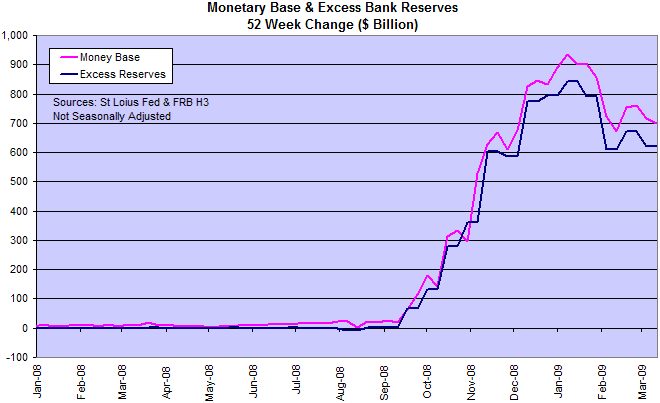
We have already witnessed a rapid rise in the US monetary base, caused by the Fed's actions to shore up the financial sector. But the surplus has not succeeded in expanding bank lending, most of it finding its way back to the Fed, deposited as excess reserves. Banks are trapped by their inability to find sound customers who want to borrow: the private sector are selling off assets and reducing debt.
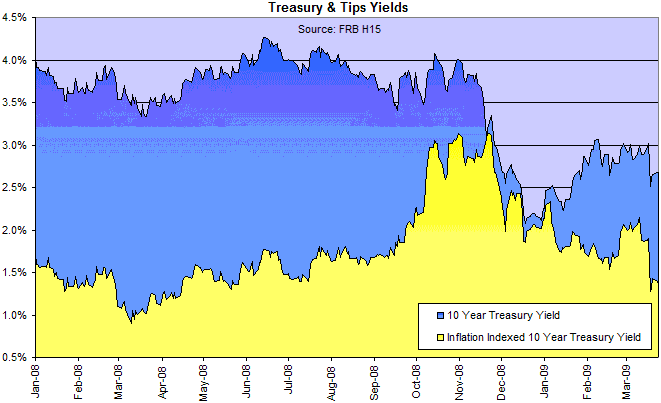
Will the Fed succeed where the Bank of Japan failed — and persuade the private sector to borrow to acquire new assets? The bond market is betting they will fail, with TIPS and treasury yields declining in anticipation of low inflation.
Gold buyers, however, are betting they will succeed and inflation will rise. Though silver appears to be taking the opposite view.
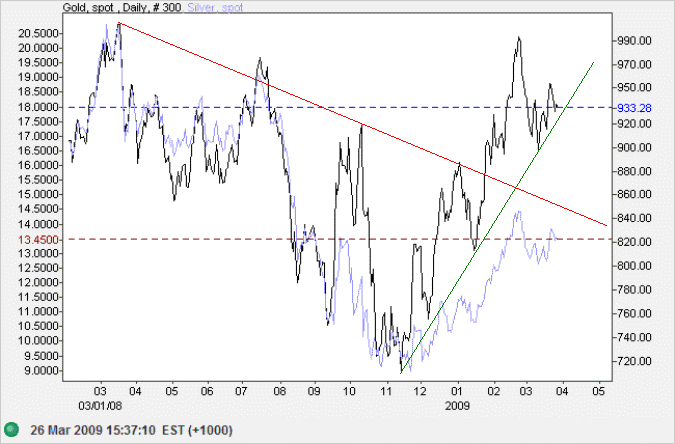
Despite recent signs that the Fed is prepared to inflate, the deflationary spiral will be difficult to break. Expect deflation for a year if not longer, followed by inflation if the Fed succeeds in its attempts to raise bank lending. This is likely to be a protracted recession.
Self-Defeating Behavior
It is interesting to observe most governments attempting to shore up falling asset prices — to protect banks from complete collapse. But their efforts may succeed in prolonging the recession. Low asset and commodity prices are the catalyst that spurs private business and individuals to start borrowing again. At some point the opportunities presented become to good for them to pass up. If prices are prevented from falling, the market stagnates as there is insufficient incentive to take on the additional risk.
When it comes to a trade-off between saving the banks or prolonging the recession, my bet is that the Fed will follow the BoJ and save the banks.
| Read More.... | ||
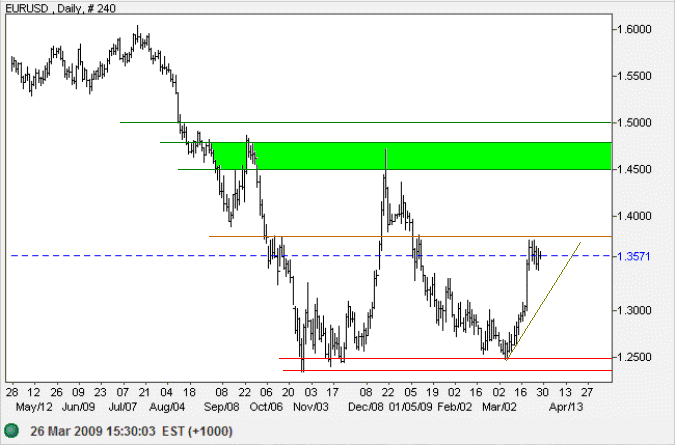 | 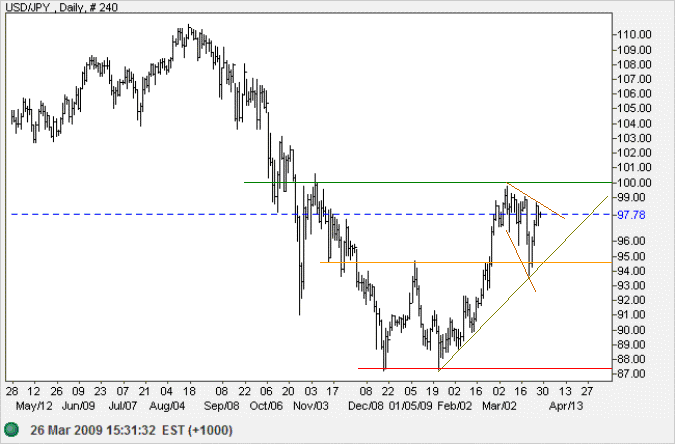 | 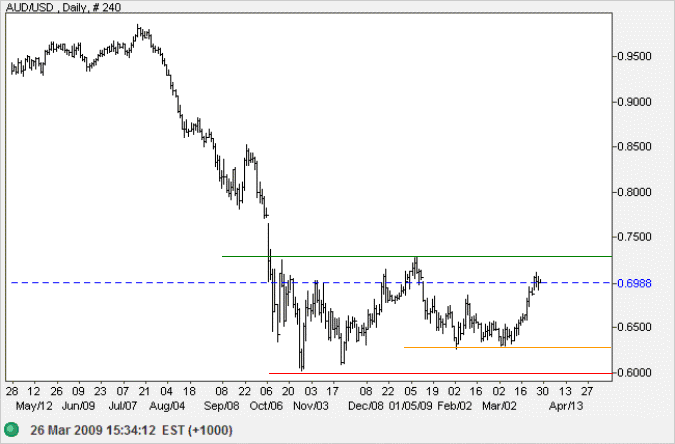 |
| Euro | Japanese Yen | Australian Dollar |
------------------------
Quickgainz
Prudently,Wisely,Timely
------------------------
quickgainz@gmail.com


No comments:
Post a Comment